Wednesday, December 14, 2016

Max Pitsinos - Important places of Islam and Byzantium

Islamic Vs. Byzantine Locations
of Importance

There are many important places for both the Islamic religion and the beliefs of the Byzantine citizens. Both of these religions have important sites that are crucial to the beliefs and studies of the followers of religion. Some religious sites are still in their original place and still are visited by devout people all over the world to get a close up view of a particular and spiritual place. A few important places in the Islamic religion are special mosques, some built by the Prophet Muhammed, and shrines to allah, and monasteries and churches are important to the byzantine christian religion.
In Islamic culture, mosques are very important to the muslim’s religion. Muslims visit mosques on certain days of the week every week to pray and worship in their own way. Mosques are viewed as a house of worship to muslims and they should be kept clean and holy in their beliefs. The Bibi - Khanom mosque in the City of Samarkand was a hub to muslims around the world as is the city of Mecca. Samarkand contained more than just muslims and still has many different religious people there today. “Samarkand was a major city along the silk road” (Hutchinson), strategically to the status of Samarkand as a city. Because of the position of Samarkand, it attracted many different religions that people living in the city adopted and started following as their religion. These religions sparked people to build mosques and churches as a place for people to gather and worship. Mosques are just like churches in the fact that people go there to worship, and they allow muslims to have a place where they can worship with people that have the equal views, no matter where in the world, they happen to be.

Shrines to Allah and Muhammad are also of great importance to muslims all around the globe. Shrines are built to commemorate something, or to remember someone that has lived for real, or a deity that is worshipped. There are many shrines in the world dedicated to muslim beliefs. “Most of Islam’s sacred places are in the Middle East, specifically in the Arabian Peninsula” (Islam Sacred Places). To muslims, the most important one in the world is in Mecca, the sacred city of Islam. This shrine is called the Ka’ba and is very close to the center of the city of Mecca. This place is considered to be one of the most, if not the most sacred place in all of the world for muslims in the Islamic religion. For muslims, a core belief is to make a pilgrimage to the city of Mecca at least once in their lifetime. Every year at a different time, millions of muslims come to mecca to see the city, and to visit the Ka’ba shrine and worship and pray with so many other muslims. Mecca and the shrines there are so important to muslims, because of their religious qualities and how they are portrayed in the Islamic religion, as a sacred place of Allah.

For christians in the Byzantine empire, they believed that there was only one god. They built churches and monasteries as places to go and worship their god. In monasteries, some people went there to spend their lives working and praying for their god. One of the most important Byzantine churches is the Hagia Sofia. It is also still one of the largest churches today, specifically christian churches. The Hagia Sofia is a great achievement in architecture and is a beautiful contribution to religion. The Hagia Sofia is so important to christians because of the church’s prestige. “The Hagia Sophia stands as a monument to the splendor of the Byzantine Empire” (Stockdale). This great church was a maze of towers, and was in very sharp detail to bring out the architecture of the Byzantine empire. Another important feat of architecture in the Byzantine Empire was the Church of Hosios Loukas. This was a monastery built by saints that wanted a place to come together. This monastery was made of almost every resource available including brick, tile, stone, and many others. This monastery was named after a saint that came to the monastery at age fourteen, and stayed there his entire life, doing what he wanted to do, which was worship and pray with other christians. The Byzantine empire had very important places essential to the religion and the followers of its beliefs.


The Islamic and Byzantine religions are very much different in their beliefs and ways of carrying them out, but one thing that they both have in common is the structures built by man to remember and celebrate certain aspects of their religion. These places are all over the world and attract many different people to see what life was like in the Byzantine and Islamic days. These architectural feats are revered by all and bring out the beliefs of religion into physical, real structures to last a lifetime.


Works Cited


Hutchinson, Jennifer. "Samarkand." World History: Ancient and Medieval Eras, ABC-CLIO,
2016, ancienthistory.abc-clio.com/Search/Display/1258767. Accessed 6 Dec. 2016.

“Islamic sacred places.” ReligionFacts.com. 18 Nov. 2016. Web. Accessed 12 Dec.

Rautman, Marcus. "Byzantine Monasteries." World History: Ancient and Medieval Eras, ABC-CLIO,
2016, ancienthistory.abc-clio.com/Search/Display/1509272. Accessed 5 Dec. 2016.

Stockdale, Nancy L. "Hagia Sophia." World History: Ancient and Medieval Eras,
ABC-CLIO, 2016, ancienthistory.abc-clio.com/Search/Display/1037449. Accessed 12 Dec. 2016.

Islam vs Byzantine Empire Laws, Rules, and Customs- Ruby Claire

Ruby Claire Jones
D Block
12/12/16
Islam vs. Byzantine Empire Laws, Rules, and Customs
When the Byzantine Empire was in power and Islam was a very important religion some people did not realize how similar they were and their differences. Byzantium was in Constantinople and Islam was very big throughout the middle east. When comparing Islam versus Byzantine the focus on their laws, rules, and customs are very important. The five pillars of islam and the ten commandments are the most important laws and rules of each religion.

Islam’s five pillars are the basis of the religion. The five pillars are: Shahadah, Salat, Zakat, Sawm, and Hajj. The Shahadah is the first pillar, it is reciting the Muslim profession of faith. It says, “La illaha illa Allah, Muhammadur rasoolu Allah” the meaning of it is there is only one true god and that Muhammad is the messenger of god. Shahadah is the most important pillar of faith. Salat the second pillar is when Muslims perform the ritual prayers five times a day.  The prayers are a link between the person praying and god, they are performed at dawn, noon, the middle of the afternoon, sunset, and night. The prayers can be performed everywhere, like homes, offices and universities. Zakat is the third pillar when Muslims pay charity tax to benefit the needy.  The reason for Zakat is that they believe that everything belongs to god and that wealth was given to human beings from god with trust. The Muslims also believe that giving Zakat purifies their possessions. The fourth pillar, Sawm is fasting during the month of Ramadan. Every year in the month of Ramadan Muslims fast from dawn till sundown abstaining from food and drink. Sawm is regarded as a method of spiritual self purification by gaining sympathy for those who do not get to eat. At the end of Ramadan they have a feast called Eid al-Fitr. The last pillar, Hajj is the annual pilgrimage to mecca, mecca is located in Saudi Arabia It is an obligation for muslims that are able to go. Two million muslims come each year and it is always performed during the twelfth month of the Islamic calendar. The muslims that participate all wear the same clothing to stand as equals before Allah. The Kaaba is what the muslims bow to when they are there and it is located in the center of the mosque, and it was built by the prophet Abraham’s son, Ishmael (What are the Five Pillars?).The five pillars are the most important rules of Islam and are the basis for all the followers of the religion.

In the Byzantine empire the religion that all the civilians believed was Christianity. The empire was split up into two branches of Christianity, Orthodox and Catholicism. The main rules of Christianity are the ten commandments (ABC Clio, Skira). The ten commandments are: I am the lord your god, Thou shalt bring no false idols before me, Do not take the name of the Lord in vain, Remember the Sabbath and keep it holy, Honor thy father and thy mother, Thou shalt not kill, Thou shalt not commit adultery, Thou shalt not steal, Thou shalt not bear false witness against your neighbor, and Thou shalt not covet your neighbor's wife. The ten commandments are believed to be written by God when moses went up on a mountain to talk to him (KJV Exodus 20: 1-17). In the orthodox church and the catholic church the ten commandments are the same, they are the main laws of christianity. All Christians believe in the ten commandments and follow them. The commandments form lifestyles of many christians.

The five pillars of Islam and the ten commandments of Christianity have more in common than most people would think. In the first pillar, Shahadah the prayer mentions that there is only one god, Allah. In the first and second commandments it states that god is the lord your god and that you should not bring false idols before god. They both mean that there is only one god that the followers of each religion should follow, and there is only one god in each religion. In Islam it is required to go to mecca at least once in your lifetime, and there is no required trip in Christianity. Also Muslims are required to give Zakat, a form of charity, in their religion. Christians are not required to give a portion of their income to charity, it may be suggested by their church. In christianity the ten commandment never say to pray or worship God, unlike in the five pillar where the Muslims are required to pray five times a day to Allah. The differences between the rules of Islam and Christianity are few and they are more similar than most people would think.

Islam and christianity have very similar, but at the same time very different laws and rules of each religion. In the Byzantine Empire Christianity was very important in the lives of the civilians and in the middle east Islam’s rules were very important to their daily lives. Most do not realize the similarities in the two religions laws and rules they follow. Learning about the differences and similarities in Islam and Christianity helps you understand the religions better. The laws and rules of each religion are very important to everyone around the world that follows these religions.
Work Cited

Beverley, James A. "Introduction to Islam." World Religions: Belief, Culture, and Controversy,
ABC-CLIO, 2016, religion.abc-clio.com/Topics/Display/1577389?cid=41&sid=1577389.
Accessed 12 Dec. 2016.

Levinson, David. "Introduction to Eastern Orthodox." World Religions: Belief, Culture, and
Controversy, ABC-CLIO, 2016, religion.abc-clio.com/Topics/Display/1576841?cid=41&sid=1576841. Accessed 12 Dec. 2016.

Skira, Jaroslav Z. "Introduction to Catholicism." World Religions: Belief, Culture, and
Controversy, ABC-CLIO, 2016,
religion.abc-clio.com/Topics/Display/1572238?cid=41&sid=1572238.
Accessed 12 Dec. 2016.

"The Basis of the Social Concept." The Russian Orthodox Church. N.p., n.d. Web. 12 Dec. 2016.

"The Ten Commandments." A Russian Orthodox Church Website RSS. N.p., n.d. Web. 12 Dec.

2016.

David Casimes-- Art


Comparing and Contrasting Islam & Christianity’s Impact on Society during the Byzantine Empire: Art

There are many differences between Islam and Christianity, art is a connection between them and it helps to create an understanding between the two religions. The most popular medium between the two religions is the use of mosaics. Mosaics were used in places of worship, to display holy images. Art was used religiously and it was also tied to that civilizations governmental beliefs.  Art was mostly placed in sacred places and places of worship. Islam and Christianity have both been survived through their religious texts, passed-on stories, and most visually art. Art in the Byzantine era was more than just religion, it was also a thread between government and the people. It was used so the two parties could better understand each other. Art in this period was the foundation to informing the people about the wonders in their life and faith.

Art in Islam focused on the glorification of God. There were many different types of art used to express their religious beliefs. Islamic art was based on two ideas, the first was discouraged subject matters, “For example, since Muslims believed that only Allah can create life, images of living beings were discouraged. Thus, many artists turned to calligraphy, or the art of beautiful hand-writing” (Beck 276). Since they couldn’t draw people, they made everyday objects more beautiful. The Muslims used calligraphy to write about their religious beliefs. Calligraphy was also beneficial in writing the Qur’an. It is described that “Muslim artwork sometimes focuses on strictly geometric patterns. Geometric designs can be found in everything from pottery to architecture” (277). Most of Muslim art is balanced geometric patterns. For example, small painted ceramic tiles (mosaics) can be used in various methods like domes on churches and murals. “The second restriction discouraged the use of costly materials. Islamic artists, therefore, worked mainly with brass, clay, and wood” (Bosch). Art on a budget gave a challenge to the Islamic artists, these materials would have to become beautiful pieces of art. The two restrictions on Islamic art was an obstacle for all artists in this era, but it helped create a sense of meaning in the diverse world of Islamic artwork.

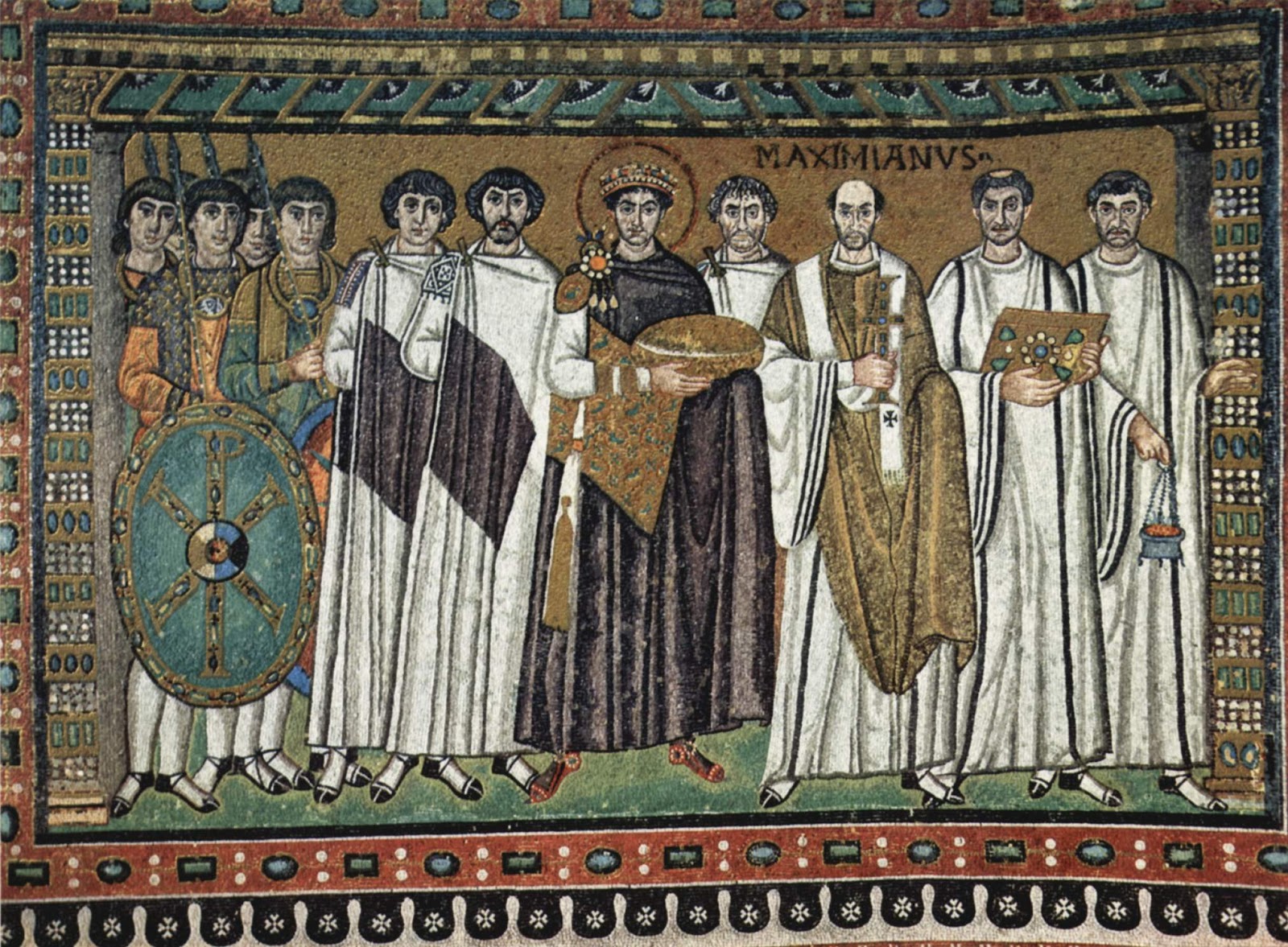
Art in Byzantine focused on creating what we can’t see. “Generally speaking, Byzantine art differs from the art of the Romans in that it is interested in depicting that which we cannot see-the intangible world of Heaven and spiritual” (Hurst). Byzantine art is about giving worshippers perspective and also real-world political beliefs. In Byzantine, churches always have a dome. Like the Islam culture, Byzantine’s also used mosaics to display holy images like heaven. One of Byzantine’s most popular churches, the Hagia Sophia is decorated in mosaics, “All the walls of the Hagia Sophia except the ones covered by marble have been decorated with exceptionally beautiful mosaics. Gold, silver, glass, terracotta and colorful stones have been used to make the mosaics” (Hagia History).  These mosaics cover the church and create a holy environment for all the worshippers. The art is a gate between heaven and earth, it opens a perspective of how beautiful faith can be. “Similarly, mosaics, such as those within the Church of San Vitale in Ravenna,  sought to evoke the heavenly realm” (Hurst). The mosaics in the San Vitale expresses the thought of creating what we cannot see. In the middle of one Justinian mosaic, Justinian is standing there to connect the religious, military, and governmental beliefs of the Byzantine empire. The halo around Justinian’s head is interpreted to show that he is divine, the connector of the heavenly realm. Byzantine art  is not only seeing the unseeable but it is also a thread between the three main branches of the civilization; government, military, and religion.


Islam and Byzantine art were both very similar, they influenced each other too. “Islamic leaders were impressed by Byzantine mosaics to work on the Dome of the Rock in Jerusalem” (Labatt). Art helped bind the two religions together on a common goal. The Byzantine’s helped with an Islamic church because, “Few places are as holy for Christians, Jews and Muslims as the Haram al-Sharif” (Macaulay-Lewis). The dome of the rock has Byzantine architecture and for the most part is filled with Byzantine style mosaics. This church is a real-world example on how two religions can have separate beliefs but still cooperate and create a sacred masterpiece. Both religions involve political and spiritual aspects in their art to ensure a harmony of the people, it is all about seeing beauty and light in everything. Art is an outlet for most religious people, it is always an interpretation. Popular art is about the audience being able to relate to an interpretation, even if it is controversial. Even if these two religions have conflicts in their beliefs, art can be a balance on how close they  really are.

It is obvious that these two religions are not the same, however, comparison can add a new lens on the perspective of the two. The Islams, would praise God through their methods in art and the Byzantines would create what God has made for them. Both used art as visual proof to the worshippers. Mosaics, for example, were used in both religions and the followers of religion can be compared to the individual ceramic tiles. Each one is different but when they are put together to create a mosaic, art is created. This may be a cliché analogy but it is an accurate representation on religion. Art is a beautiful way for people of faith to express their interpretations with like minded people.


Works Cited:

Macaulay-Lewis, Elizabeth. "Khan Academy." Khan Academy. N.p., n.d. Web. 12 Dec. 2016.

Macaulay-Lewis, Elizabeth. "Khan Academy." Khan Academy. N.p., n.d. Web. 12 Dec. 2016.

Bosch, Gulnar K. "Islamic Art and Architecture." Islamic Art and Architecture | Scholastic ART |
Scholastic.com. N.p., n.d. Web. 12 Dec. 2016. <http://www.scholastic.com/browse/article.jsp?id=3753881>.

Labatt, Annie. "Geometric Patterns in Islamic Art | Essay | Heilbrunn Timeline of Art History | The
Metropolitan Museum of Art." The Met's Heilbrunn Timeline of Art History. N.p., n.d. Web. 12 Dec. 2016. <http://www.metmuseum.org/toah/hd/geom/hd_geom.htm>.

Beck, Roger B. World History: Patterns of Interaction. Orlando, FL.: Houghton Mifflin Harcourt Pub., 2012. Print.

"History." History | Hagia Sophia Museum. N.p., n.d. Web. 12 Dec. 2016. <http://ayasofyamuzesi.gov.tr/en/history>.


Differences and Similarity of Religion and Daily Life; Islam and Byzantine

Maggie Larsen
World History I
December 12, 2016
Differences and Similarity of Religion and Daily Life; Islam and Byzantine

Christianity and Islam have since creation seen each other as different and have disagreed on which religion is the true religion. With these differences the religions are still very similar in practice and in belief, yet in popular belief they are out so far apart and seen as completely different. Islam has more structured practices and instructions. While Christianity is given more loose ways to follow the religion. Difference in belief, even with similarities, can cause difference in political laws and daily life.

Even though Islam and Christians during this time had land disputes, war, and looked upon each other as different, the religion's rules to live by and the society's rules to live by were similar. Islam had five pillars to follow in the religion; faith, prayer, social responsibility, fasting during Ramadan, and to perform the pilgrimage. (Beverley). Each of these pillars tell the followers of Islam how to live their lives, but a part of the five pillars is to follow the laws of the place they live in while sticking to the pillars. Christianity during this time had the ten commandments; God is the only god, to not make idols, never say the Lord’s name in vain, keep the sabbath holy, honor your father and mother, do not murder, do not commit adultery, do not steal, not to bear false witness against your neighbour, and do not covet. (Bailey). The five pillars and the 10 commandments may be for different religions, yet they are similar. The five pillars has social responsibility, which can relate to the 10 commandments’ in to not murder, to not commit adultery, do not steal,  and to not to bear false witness against your neighbour. These are similar because the five pillars may not directly say these things from the 10 commandments but social responsibility can relate in how to hold yourself in a community. These two can also be very different in how the religions should be practiced, Islam is more structure in prayer with prayer five times a day, while in the 10 commandments prayer is not even mentioned. These two religions have difference in practice and execution, yet still have similarities. Islam and Christianity have these religious laws, but some political laws may contradict with the religious ones.
The laws that were made by Christians’ and Muslims’ are what gave even a larger gap between what these two religions stand for. Shari’a law was the combination of the Qur’an and Sunna put together to make a series of laws (Beck). During this period in history the christians also lived by Justinian Code which had for different parts; 5,000 laws from all of the laws in Roman history, the Digest, the Institutes, and the Novellae (Rautman). The Shari’a law may have been based on religious text, while the Justinian Code was not, but they were both made by the followers’ perception of their individual holy scriptures. The Shari’a law filled in the gaps that the five pillars left, without this there would even more difference on how many different sects there are of Islam. The Justinian code was based mostly on political laws, with very few that contradicted the ten commandments even though most of the laws were written by people who were not christian. These political laws combined with religion told the followers how to live in their daily lives.

All of the laws and religious practices defined how Christians’ and Muslims’ interact and live, but highly impact how they live their day to day lives, in what they wore, and family matters. Personal appearance in Byzantium was important to the citizens, the men were usually clean shaven and kept their hair short because the christian church was against vanity. Women had long hair which was a sought after trait, if it was well kept and hidden in public (Rautman Personal Appearance). What early Muslim women wore is debated, but it is predicted that they were conservative and did not dress flamboyantly (Lindsay). Even though the structure between Christianity and Islam are very different they had similar ideas on how a woman should dress, even though the Byzantine women were much less modest they kept their hair covered and did not believe in over valuing vanity. Men had many less rules and if any the rules were more related to hair and hygiene. “The ancient custom of regular public bathing declined in late antiquity, and after the 7th century people washed less frequently, either in the house or at private baths” (Singman). This quote shows some similarities between Islam and Christianity and how ancient rituals were left behind in both cultures. Islam and Christianity daily lives were affected by each other.

Christianity and Islam had many connections with out them directly taking from one another. Islam had its own laws and ideas while still being similar and even in battle they were similar. The differences between the two were what was seen and what was thought to be all there was with nothing that goes deeper than that. The religious texts, political laws, and daily life show that even though there were multiple differences between them they had similarities in more ways than one.


Works Cited

Bailey, Lee W. "Introduction to Christianity." World Religions: Belief, Culture, and Controversy, ABC-CLIO, 2016, religion.abc-clio.com/Topics/Display/1570938?cid=41&sid=1570938. Accessed 12 Dec. 2016.
Beverley, James A. "Introduction to Islam." World Religions: Belief, Culture, and Controversy, ABC-CLIO, 2016, religion.abc-clio.com/Topics/Display/1577389?cid=41&sid=1577389. Accessed 12 Dec. 2016.
Lindsay, James. "Clothing in the Islamic World: Medieval World ." Daily Life through History, ABC-CLIO, 2016, dailylife.abc-clio.com/Search/Display/1425984. Accessed 12 Dec. 2016.
Rautman, Marcus. "Crime and the Law in the Byzantine Empire." World History: Ancient and Medieval Eras, ABC-CLIO, 2016, ancienthistory.abc-clio.com/Search/Display/1715866. Accessed 12 Dec. 2016.
Roth, Norman. "Jews and Muslims: Medieval World." Daily Life through History, ABC-CLIO, 2016, dailylife.abc-clio.com/Search/Display/1503504. Accessed 12 Dec. 2016.
Rautman, Marcus. "Personal Appearance in the Byzantine Empire: Medieval World." Daily Life through History, ABC-CLIO, 2016, dailylife.abc-clio.com/Search/Display/1468863. Accessed 12 Dec. 2016.

Differences in Byzantium and Islamic Religious Views

One of the biggest religious misunderstandings of two extremely powerful empires began with the Islamic and Byzantine Empire. These two empires were fundamentally different and had separate views on many key beliefs such as religion. The Islamic Empire was built on the Muslim beliefs, while the Byzantine Empire was formed on Christian beliefs.  These separate religious views caused an huge rift between the empires because they refused to focus on religious similarities, and only on the differences.

The islamic religion has two extremely important holy writings: Sharia Law and the Five Pillars of Islam, that encompass all aspects for a holy muslim lifestyle. These two scriptures serve as guidance for religious and moral beliefs, governing over all parts of a muslim’s life. Sharia law covers three main topics: beliefs, character, and actions, and components of it command, “ Believe in God, the angels, prophets, revelation, and other metaphysical and physical aspects of the faith.  Strive for traits like humility and kindness, and to avoid traits such as lying and pride. Include those relating to God, such as prayer, fasting, and pilgrimage, as well as actions relating to other humans, such as marriage, crime, and business” (Hafiz). The Five Pillars of Islam is another significant guidance source for Islamic followers, and it includes five overall commandments that should never be broken. The first pillar is Shahadah, the testimony of faith,which states, “There is no true god (deity) but God (Allah),and Muhammad is the Messenger (Prophet) of God” (What are the Five Pillars of Islam). The second pillar is Salat,  which requires Muslims to pray five times a day to create a stronger connection with Allah. The third pillar is Zakat, meaning muslims donate “specified percentage on certain properties to certain classes of needy people” (What are the Five Pillars of Islam). The fourth pillar is Sawm which is the fasting during the month of Ramadan. The final fifth pillar is the Hajj, and this a pilgrimage to Mecca all able Muslims should take once in their lifetime (The Five Pillars of Islam).

Christianity has an extremely important set of rules: The Ten Commandments, and these are outlined and taught throughout the Christians’ holy scripture: The Bible. The Ten Commandments is a conditional, moral covenant given to the prophet Moses by God. Moses was given these at Mount Sinai ca. 1300 BCE and shared them with the hebrews of Israel ("Ten Commandments”).  The 10 commandments say, “ I am the Lord, your God, thou shall bring no false idols before me, do not take the name of the Lord in vain, remember the Sabbath and keep it holy, honor thy father and thy mother, thou shall not kill/murder,, thou shall not commit adultery, thou shall not steal, thou shall not bear false witness against your neighbor, and thou shall not covet your neighbor's wife” (The Ten Commandments List). All of these commandments are highlighted and demonstrated throughout the bible, another significant christian scripture.

Christianity and Islam, while seemingly inherently different, have many religious similarities. The first similarity is the belief in only one god. The first commandment states, “[...] You shall have no other gods before Me” (Ten Commandments), and the first pillar states, “There is no true but Allah[…]”(What are the Five Pillars of Islam). These two demands show that monotheism is a very significant component of both faiths. The next similarity is that charity is a fundamental part of both religions. The bible says “but you shall freely open your hand to him, and shall generously lend him sufficient for his need in whatever he lacks,” (Deuteronomy 15:8), and  one of the 5 pillars of Islam is Zakat which means charity (Saulat). The last similarity is that both believe wives should submit to their husbands. The bible shows this by stating, “Wives, submit to your own husbands, as to the Lord,” (Ephesians 5:22), and Sharia law allows this also by saying, “A man can beat his wife for insubordination” (Sharia Law). However, while the religions are similar in some areas, they are very different in others. One of the biggest differences is how religions treat followers that leave the faith. In christianity the bible discourages it, but according to sharia law leaving islam is punishable by death (Awad).


The Byzantine Empire and Islamic Empire had two seemingly different religious beliefs, but had they chosen to dig deeper they would have discovered many similarities. Some of the main similarities in holy scriptures include Islam’s Sharia Law to Christianity’s bible and The Five Pillars of Islam to the Ten Commandments. The similarities of rules within these scriptures include views on women, monotheism, and charity. However, these religions still contain differences, such as death being an acceptable punishment in the Islamic empire, while the Byzantine empire just discouraged it. Christianity from the Byzantine Empire and Islam from the Islamic Empire share many differences and similarities, creating two unique, but similar religions.
Awad, Abed. "Does Islam Really Condemn Converts to Death?" CNN. Cable News Network,

n.d. Web. 11 Dec. 2016.


"◄ Deuteronomy 15:8 ►." Deuteronomy 15:8 but You Shall Freely Open Your Hand to Him, and
`
Shall Generously Lend Him Sufficient for His Need in Whatever He Lacks. Holman Bible

Publishers, n.d. Web. 11 Dec. 2016.


"Ephesians 5:22-33 NIV - - Bible Gateway." Bible Gateway. N.p., n.d. Web. 11 Dec. 2016.


Hafiz, Yasmine. "Sharia Law In The USA 101: A Guide To What It Is And Why States Want To Ban

It." The Huffington Post. TheHuffingtonPost.com, n.d. Web. 08 Dec. 2016.


Saulat. "The Five Pillars of Islam." WhyIslam. N.p., n.d. Web. 11 Dec. 2016.


"Sharia Law." SHARIA LAW - LIST OF KEY RULES | What Is Sharia Law? N.p., n.d. Web. 11 Dec.

2016.


"Ten Commandments." World Religions: Belief, Culture, and Controversy, ABC-CLIO, 2016,

religion.abc-clio.com/Search/Display/1605936. Accessed 11 Dec. 2016.


"The Five Pillars of Islam." BBC. N.p., 08 Sept. 2009. Web. 11 Dec. 2016.


"The Ten Commandments List." Ten Commandments - The List. N.p., n.d. Web. 11 Dec. 2016.


"You Are Here: Islam Guide Home Chapter 3, General Information on Islam What Are the Five

Pillars of Islam?" Islam Guide: What Are the Five Pillars of Islam?N.p., n.d. Web. 08 Dec.

2016.